
How to Remove Blackheads at Home Safely

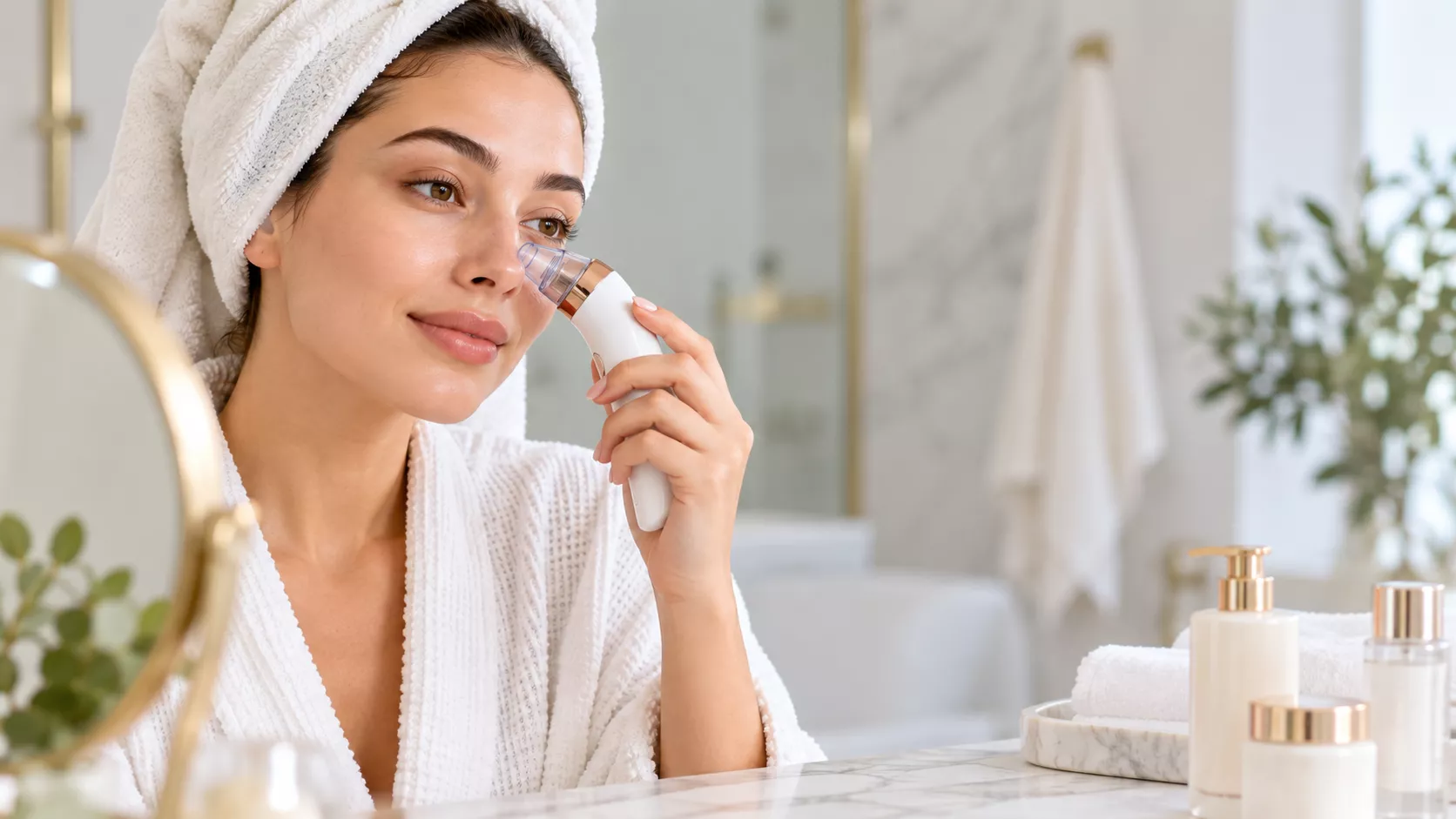
How to Remove Blackheads at Home Safely
Blackheads are one of the most common skincare concerns, especially around the nose, chin, and forehead. These tiny dark spots can make pores appear congested and leave the skin looking uneven, even when you follow a regular cleansing routine.
If you’re wondering how to remove blackheads at home safely, the answer starts with gentle skincare, suitable pore-clearing ingredients, and avoiding aggressive extraction methods.
In this guide, we’ll explain what causes blackheads, how to manage them at home, which mistakes to avoid, and how a targeted cleansing device such as the PorePure Pro Rechargeable Blackhead Vacuum & Pore Cleanser may fit into your skincare routine.
What Are Blackheads?
Blackheads are a type of acne known as open comedones. They form when excess sebum (the skin’s natural oil) and dead skin cells collect inside a hair follicle.
When the material at the surface of the clogged pore is exposed to air, it oxidizes and develops a darker appearance.
Despite their color, blackheads are not simply dirt trapped inside your skin.
They commonly appear on:
- The nose and sides of the nose
- The chin
- The forehead
- Other areas with increased oil production
Blackheads can develop in different skin types, although they are especially common in oily and combination skin.
Blackheads vs. Sebaceous Filaments: What’s the Difference?
Before attempting blackhead removal at home, it’s helpful to understand that not every visible dot on your nose is a blackhead.
Blackheads are clogged pores that appear as noticeable dark plugs.
Sebaceous filaments are natural structures that help move oil to the skin’s surface. They often appear as small, flat, grayish or yellowish dots.
Sebaceous filaments are a normal part of healthy skin and do not need to be removed.
If you’re unsure whether you’re seeing blackheads or sebaceous filaments, avoid aggressive extraction. A dermatologist can help identify the difference.
How to Remove Blackheads at Home Safely: Step-by-Step
The safest approach combines consistent skincare with products that help prevent clogged pores. Physical extraction is not always necessary.
Step 1: Cleanse Your Face Gently
Start by washing your face with a gentle, non-comedogenic facial cleanser.
Cleansing removes surface oil, sweat, makeup residue, and environmental buildup.
For everyday cleansing:
- Wet your face with lukewarm water.
- Apply a gentle cleanser using your fingertips.
- Massage lightly without aggressive scrubbing.
- Rinse thoroughly.
- Pat your face dry with a soft, clean towel.
Wash your face up to twice daily and after sweating.
Avoid harsh cleansing brushes or excessive washing, which may irritate your skin.
Step 2: Consider Salicylic Acid for Clogged Pores
Salicylic acid is a common ingredient used in skincare products designed for acne-prone skin.
It helps exfoliate and unclog pores, making it particularly useful for blackheads and whiteheads.
Look for a salicylic acid cleanser or leave-on treatment formulated for your skin type.
Introduce the product gradually, follow its instructions, and avoid combining multiple new exfoliating treatments at once.
If your skin becomes dry, irritated, or uncomfortable, reduce use or stop the product.
Step 3: Consider a Retinoid When Appropriate
Topical retinoids, including adapalene, can help prevent clogged pores and treat blackheads.
They work differently from physical extraction devices because they address the processes that contribute to acne formation.
Retinoids can cause dryness and irritation, particularly when first introduced. Ask a pharmacist or dermatologist whether one is suitable for you.
If you’re pregnant or planning pregnancy, consult a healthcare professional before using acne treatments, particularly retinoids.
Step 4: Keep Your Skin Moisturized
Even oily skin needs hydration.
A suitable moisturizer helps support the skin barrier and can reduce the discomfort associated with drying acne treatments.
Choose a lightweight, non-comedogenic moisturizer if your skin is prone to clogged pores.
Apply moisturizer after cleansing and as directed alongside any acne treatment.
Step 5: Avoid Squeezing Blackheads
Trying to force out a stubborn blackhead with your fingernails can cause more problems than it solves.
Excessive pressure may lead to:
- Skin irritation and redness
- Increased inflammation
- Infection
- Dark marks after inflammation
- Scarring
Deep or persistent blackheads are better assessed by a qualified dermatologist who can perform professional extraction when appropriate.
Step 6: Consider a Pore Vacuum for Occasional Surface Cleansing
Some people prefer adding an at-home pore vacuum to their facial care routine.
A pore vacuum uses suction to help lift loose surface oil and debris from targeted areas.
However, it is important to understand that a blackhead vacuum is not a proven replacement for acne treatments, and it may not remove deeper blackheads.
Incorrect use can cause bruising, irritation, or damage to small blood vessels.
If you choose to use one, begin with very low suction, follow the manufacturer’s directions, and avoid using it on sensitive or inflamed skin.
Can a Blackhead Vacuum Help With Pore Cleansing?
A blackhead vacuum is a handheld beauty device designed for targeted surface cleansing.
Unlike a traditional cleanser, it uses mechanical suction.
Some users may find that gentle suction removes visible surface buildup, but results vary, and stronger suction does not necessarily improve effectiveness.
Vacuum devices should be treated as optional cosmetic tools rather than essential blackhead treatments.
A device with adjustable suction can offer greater control over the intensity used on different facial areas.
Featured Skincare Tool: PorePure Pro Blackhead Vacuum
For those interested in targeted at-home pore care, Flowressa offers the PorePure Pro Rechargeable Blackhead Vacuum & Pore Cleanser.
The device is designed to help lift excess surface oil and visible buildup from selected facial areas.
Key Features of PorePure Pro
Adjustable Suction Levels
Allows users to begin at the lowest setting and select an appropriate level based on comfort and skin tolerance.
Four Interchangeable Cleansing Heads
Provides different attachment options for targeted facial areas, including the nose, chin, and forehead.
Rechargeable Cordless Design
Offers portable use without the need for disposable batteries.
Digital Function Display
Provides a convenient way to view and manage the device’s settings.
Targeted Facial Cleansing
Designed for occasional cosmetic cleansing of suitable, non-irritated skin.
Explore PorePure Pro Blackhead Vacuum at Flowressa →
Remember that PorePure Pro is a cosmetic cleansing device. It does not permanently eliminate blackheads or treat underlying acne.
How to Use PorePure Pro Carefully at Home
If your skin is suitable for a suction device, proper technique is essential.
1. Prepare Your Skin
Cleanse your face to remove makeup, sunscreen, and surface impurities.
You may place a comfortably warm—not hot—towel on the treatment area for a few minutes.
Pat your skin dry before using the device, as directed by its instructions.
2. Choose the Appropriate Attachment
Select one of the four cleansing heads according to the facial area and the device’s instructions.
Do not use attachments around the delicate eye area or lips.
3. Start With the Lowest Suction
Always begin with the lowest available intensity.
Test a small, less visible area briefly before proceeding.
If the device causes pinching, pain, or pronounced redness, discontinue use.
4. Keep the Device Moving
Glide the device lightly over suitable skin using short, controlled movements.
Never leave the suction head stationary on one spot.
Avoid repeated passes over the same area.
5. Keep Your Session Short
Focus only on a small area rather than attempting to treat your entire face.
For initial use, be conservative. Follow the product’s recommended frequency and allow your skin to recover completely between sessions.
Do not use the device daily.
6. Moisturize Afterward
Apply a gentle moisturizer after your session.
Avoid aggressive scrubs, exfoliating acids, or other potentially irritating treatments in the same routine, especially if your skin feels sensitive.
7. Clean the Attachments
Remove and clean the used suction head according to the product instructions.
Allow washable components to dry fully before storing them.
For a more detailed explanation, read our related article: How to Use a Blackhead Vacuum Safely at Home.
When Should You Avoid Using a Blackhead Vacuum?
A pore vacuum is not suitable for every skin type or condition.
Avoid using suction devices on:
- Active, painful, or inflamed acne
- Broken or irritated skin
- Sunburned skin
- Rosacea-prone areas
- Visible broken capillaries
- The delicate area around the eyes
- Recently waxed or professionally exfoliated skin
People with highly sensitive skin, certain skin conditions, or skin made more fragile by treatments should consult a dermatologist before using suction devices.
Stop immediately if you experience pain, bruising, significant redness, or unusual irritation.
Common Blackhead Removal Mistakes to Avoid
Using Harsh Scrubs
Aggressive physical exfoliation can irritate the skin and worsen acne.
Choose gentle skincare products instead of trying to scrub blackheads away.
Using Toothpaste or Harsh DIY Treatments
Toothpaste is not an appropriate blackhead treatment. Its ingredients may irritate the skin.
Avoid relying on unverified home remedies when safer, evidence-based skincare options are available.
Using Too Many Products at Once
Combining acids, retinoids, scrubs, and mechanical cleansing devices can overwhelm the skin.
Introduce new treatments individually and follow their usage instructions.
Using Excessive Vacuum Suction
High suction may cause bruising and broken blood vessels.
Using the strongest setting is not a shortcut to clearer skin.
Expecting Permanent Results
Blackheads may return as the skin continues producing oil and shedding dead cells.
Consistent skincare and appropriate treatment are more important than repeated extraction.
A Simple Daily Skincare Routine for Blackhead-Prone Skin
A straightforward routine can help you manage blackheads without overcomplicating your skincare.
| Morning Routine | Evening Routine |
|---|---|
| Gentle facial cleanser | Remove makeup and sunscreen |
| Lightweight moisturizer | Gentle facial cleanser |
| Broad-spectrum SPF 30+ sunscreen | Suitable blackhead treatment, when appropriate |
| Non-comedogenic moisturizer |
If you choose to incorporate a pore vacuum, use it only occasionally and according to the device instructions. Do not combine it with irritating exfoliation in the same session.
For additional routine-building advice, explore our guide: How to Build the Perfect Skincare Routine at Home.
How to Help Prevent Blackheads From Returning
Although no routine can guarantee permanently blackhead-free skin, a few habits may help reduce recurring congestion.
Choose non-comedogenic products. Look for moisturizers, sunscreens, and makeup labeled as suitable for acne-prone skin.
Remove makeup before bed. Avoid leaving makeup and daily residue on your skin overnight.
Keep cleansing gentle. Wash regularly without excessive friction or harsh scrubbing.
Use suitable acne treatments consistently. Ingredients such as salicylic acid and adapalene can help manage blackheads over time.
Avoid picking at your pores. Repeated squeezing may irritate the skin and leave marks.
Protect your skin from the sun. Use broad-spectrum SPF 30 or higher as part of your daytime routine.
When Should You See a Dermatologist?
Professional advice may be appropriate if:
- Blackheads are deep, widespread, or persistent.
- You also experience painful or inflamed acne.
- Your skin develops scars or lingering dark marks.
- Over-the-counter treatments do not improve your skin after consistent use.
- Your skin reacts badly to a skincare product or cleansing device.
A dermatologist can recommend appropriate acne treatments and determine whether professional extraction is suitable.
Frequently Asked Questions About Blackheads
What is the safest way to remove blackheads at home?
The safest starting point is a gentle skincare routine with appropriate treatments such as salicylic acid or a suitable topical retinoid. Avoid squeezing and aggressive extraction.
Can blackheads disappear naturally?
Some superficial blackheads may improve on their own, while deeper or persistent blackheads may require treatment.
How long does it take to improve blackheads?
Results depend on the treatment and your skin. Acne treatments often require several weeks of consistent use before noticeable improvement.
Does a blackhead vacuum remove blackheads permanently?
No. A vacuum may remove some loose surface buildup, but it does not permanently prevent clogged pores or replace established acne treatments.
Can I use a blackhead vacuum every day?
Daily use is not recommended. Repeated suction can increase the risk of irritation and bruising. Always follow the manufacturer’s instructions and allow adequate recovery time.
Is it safe to squeeze blackheads at home?
Squeezing may cause irritation, inflammation, infection, or scarring. Professional extraction is preferable for stubborn blackheads.
Why do I have black dots on my nose even after cleansing?
Some dark-looking dots may be sebaceous filaments rather than blackheads. Sebaceous filaments are normal skin structures and do not need to be extracted.
Final Thoughts: Healthy Pores Start With Gentle Care
Learning how to remove blackheads at home safely means choosing methods that support your skin rather than damage it.
Start with gentle cleansing, appropriate acne treatments, regular moisturizing, and sun protection. Avoid squeezing, excessive exfoliation, and aggressive suction.
If you enjoy using skincare tools, a carefully selected pore cleanser may be an optional addition to your routine.
For targeted surface cleansing, explore Flowressa’s rechargeable pore-care device.
Discover PorePure Pro — Your At-Home Pore-Care Companion
Shop PorePure Pro Rechargeable Blackhead Vacuum & Pore Cleanser →
Flowressa — Beauty Refined.
References and Further Reading
- American Academy of Dermatology — Adult Acne Treatment
- American Academy of Dermatology — Acne Skin Care Tips
- Cleveland Clinic — Blackheads
- Cleveland Clinic — Sebaceous Filaments
- University of Utah Health — Should You Vacuum Your Pores?
Disclaimer: This article is intended for general skincare education and is not a substitute for professional medical advice. Individual skin conditions and treatment needs vary.