
How to Exfoliate Your Body Properly at Home

How to Exfoliate Your Body Properly at Home
Soft, refreshed-looking skin does not require an overly complicated body-care routine.
One of the simplest ways to upgrade your shower routine is learning how to exfoliate your body at home correctly.
Exfoliation helps remove surface buildup and dead skin cells from the outermost layer of the skin. However, stronger scrubbing does not necessarily mean better results. The key is to use a gentle technique, choose a method that suits your skin, and avoid over-exfoliating.
In this guide, we will explain how body exfoliation works, how to exfoliate step by step, common mistakes to avoid, and how a reusable body scrubber can fit into your regular shower routine.
What Is Body Exfoliation?
Body exfoliation is the process of removing dead skin cells and surface buildup from the outer layer of your skin.
Your skin naturally sheds old cells, but exfoliation can be used as an additional body-care step when your skin feels rough or when you want to create a smoother-feeling shower routine.
There are two main types of exfoliation:
Physical Exfoliation
Physical or mechanical exfoliation uses a tool or textured product to gently work across the skin.
Examples include:
- Silicone body scrubbers
- Soft body brushes
- Washcloths
- Exfoliating gloves
- Body scrubs
When using physical exfoliation, gentle pressure is important. Scrubbing aggressively can leave skin feeling irritated or uncomfortable.
Chemical Exfoliation
Chemical exfoliation uses ingredients such as alpha hydroxy acids (AHAs) or beta hydroxy acids (BHAs) to help remove surface skin cells.
These products should always be used according to their individual directions.
If you already use chemical exfoliating products, retinoids, or other potentially irritating skincare ingredients, be cautious about adding aggressive physical exfoliation at the same time.
How to Exfoliate Your Body at Home Step by Step
A good exfoliating routine does not need many products.
Here is a simple approach you can incorporate into your shower routine.
Step 1: Start With Warm Water
Begin by wetting your body with comfortably warm water.
Avoid extremely hot water, especially if your skin tends to feel dry or sensitive.
Allowing your skin to become wet before using a body scrubber makes the process more comfortable and allows your body cleanser to spread more easily.
Step 2: Choose a Gentle Body-Cleansing Tool
When learning how to exfoliate your body at home, choosing the right tool can make your routine much easier.
A soft silicone body scrubber can provide gentle physical cleansing without requiring a complicated setup.
For a convenient option, consider the:
Flowressa Body Cleansing & Massage Scrubber
👉 Shop the Body Cleansing & Massage Scrubber:
https://flowressa.com/product/product-silicone-bath-brush-body-scrubber/
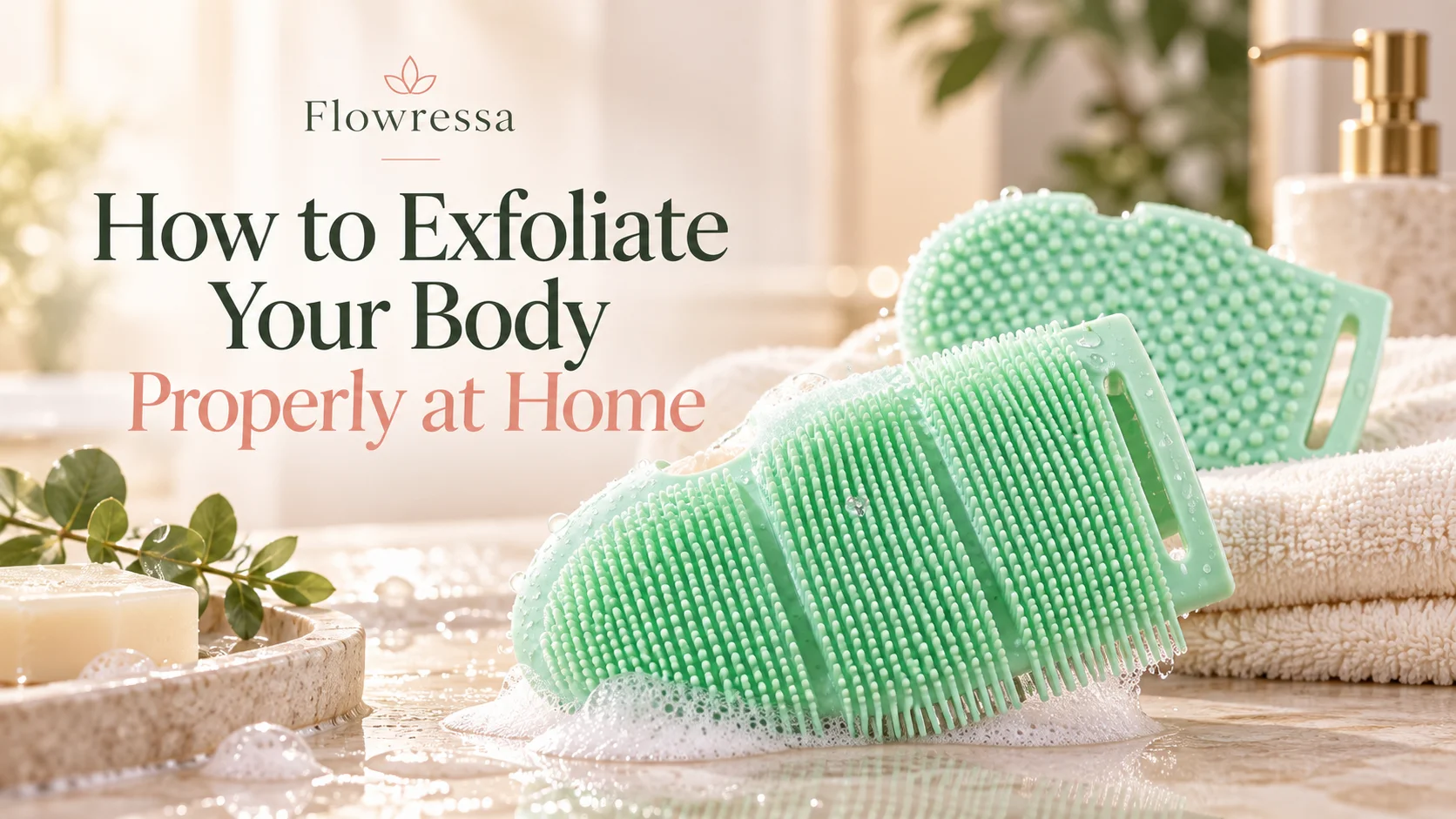
This reusable silicone bath brush features two usable sides: soft flexible bristles for everyday cleansing and a textured surface for gentle body scrubbing and massage.
It can be paired with your preferred shower gel, body wash, or soap.
How to Use the Flowressa Body Cleansing & Massage Scrubber
Using the body scrubber is simple.
1. Wet the Brush
Wet both your skin and the silicone bath brush with warm water.
2. Add Your Body Wash
Apply a small amount of your preferred shower gel or body cleanser to the soft bristle side.
3. Cleanse Gently
Move the scrubber across your body using gentle circular motions.
There is no need to press aggressively.
Pay attention to commonly rough areas such as:
- Elbows
- Knees
- Legs
- Arms
- Shoulders
Use lighter pressure on areas that feel more sensitive.
4. Flip to the Massage Side
When desired, turn the brush over and use the textured silicone side for a gentle massage or additional scrubbing sensation.
5. Rinse Your Skin
Rinse away your body cleanser thoroughly using clean, comfortable-temperature water.
6. Clean the Brush
Rinse the silicone scrubber thoroughly after use and allow it to air dry in a clean, ventilated location.
👉 View the Flowressa Silicone Body Scrubber:
https://flowressa.com/product/product-silicone-bath-brush-body-scrubber/
Which Areas of the Body Should You Exfoliate?
Many areas of the body can be exfoliated gently, but some areas may need more or less pressure.
Arms and Legs
The arms and legs are common areas for body exfoliation.
Use gentle circular movements rather than repeatedly scrubbing the same area.
Elbows and Knees
These areas can sometimes feel rougher or drier than surrounding skin.
Spend a little extra time on them if needed, but avoid aggressive pressure.
Shoulders and Back
A body-cleansing brush can help make your regular shower routine more thorough.
Only work across areas that you can reach safely and comfortably.
Chest and Neck
Skin around the chest and neck can be more delicate.
If you exfoliate these areas, use very light pressure and avoid aggressive scrubbing.
How Often Should You Exfoliate Your Body?
There is no single exfoliation schedule that works for everyone.
How often you exfoliate depends on:
- Your skin type
- The exfoliation method
- The amount of pressure you use
- Other skincare products in your routine
- How your skin responds
The most important rule is to pay attention to your skin.
More exfoliation is not automatically better.
If your skin becomes noticeably red, irritated, uncomfortable, or overly dry, reduce the frequency or stop exfoliating until your skin feels comfortable again.
People with sensitive or very dry skin may need much gentler and less frequent exfoliation.
What Should You Do After Body Exfoliation?
Your body-care routine should not end when you turn off the shower.
Gently Pat Your Skin Dry
Avoid aggressively rubbing your skin with a towel.
Instead, gently pat the skin dry.
Apply Moisturizer
Exfoliation can sometimes leave skin feeling dry, so follow with a body moisturizer that works well for your skin.
Applying moisturizer shortly after your shower can help keep your skin feeling comfortable and hydrated.
Use Sun Protection on Exposed Skin
If exfoliated areas will be exposed to the sun, use appropriate sun protection.
Follow the directions provided with your sunscreen and reapply when necessary.
Physical vs Chemical Body Exfoliation: Which Is Better?
Neither method is automatically better for everyone.
The best option depends on your skin and personal preferences.
Physical Exfoliation May Suit You If:
- You enjoy using a body-cleansing tool in the shower
- You prefer an immediate scrubbing sensation
- You want a simple reusable shower accessory
- Your skin tolerates gentle mechanical exfoliation well
Chemical Exfoliation May Suit You If:
- You prefer leave-on or wash-off skincare formulas
- Your skin does not respond well to physical scrubbing
- You already have an established body-care routine involving exfoliating acids
Avoid combining multiple aggressive exfoliating techniques at once.
Keeping your routine simple can make it easier to see how your skin responds.
Common Body Exfoliation Mistakes to Avoid
Knowing how to exfoliate your body properly at home also means knowing what not to do.
1. Scrubbing Too Hard
More pressure does not necessarily create better results.
Gentle movements are usually enough.
2. Exfoliating Irritated Skin
Avoid exfoliating areas that are:
- Broken
- Cut
- Sunburned
- Irritated
- Uncomfortable
Allow the skin to recover first.
3. Using Very Hot Water
Very hot showers can leave some people feeling dry or uncomfortable.
Use comfortably warm water instead.
4. Forgetting to Moisturize
Apply moisturizer after exfoliating when your skin needs additional hydration.
5. Exfoliating Too Frequently
Over-exfoliation can leave your skin feeling red, dry, sensitive, or irritated.
Adjust the frequency according to how your skin responds.
6. Using a Dirty Body Scrubber
Always rinse your body scrubber after use and let it dry properly.
Keeping shower accessories clean should be part of your regular body-care routine.
Why Choose a Silicone Body Scrubber?
A silicone body scrubber can be a practical alternative to traditional shower tools.
The Flowressa Body Cleansing & Massage Scrubber combines two surfaces in one reusable tool.
One side features flexible silicone bristles for cleansing, while the other provides a textured surface for gentle massage and scrubbing.
It is designed to work with your existing:
- Body wash
- Shower gel
- Soap
- Body cleanser
Instead of adding several different accessories to your shower, one dual-sided tool can support multiple parts of your routine.
Recommended Flowressa Product
Body Cleansing & Massage Scrubber
👉 Product Page:
https://flowressa.com/product/product-silicone-bath-brush-body-scrubber/
Use it as part of a simple body-care routine to combine everyday cleansing, gentle scrubbing, and massage in your shower.
Build a Complete At-Home Self-Care Routine
Body exfoliation is only one part of taking care of your skin.
A simple routine can include:
- Gentle cleansing
- Occasional exfoliation when appropriate
- Moisturizing
- Sun protection on exposed skin
- Beauty and self-care tools suited to your needs
You can also explore Flowressa’s skincare and beauty tools for more ways to upgrade your at-home self-care routine.
👉 Explore Flowressa Skincare Tools:
https://flowressa.com/collections/skincare/
👉 Visit Flowressa:
https://flowressa.com/
Frequently Asked Questions
How do I exfoliate my body properly at home?
Start with warm water, use a gentle body scrubber or suitable exfoliating product, and work across the skin using light circular motions. Rinse thoroughly and follow with moisturizer when needed.
Avoid aggressive scrubbing.
Can I use a silicone body scrubber every day?
A silicone brush can be used for gentle body cleansing, but how often you use the textured surface for exfoliating depends on your skin and the amount of pressure used.
If your skin begins feeling irritated or overly dry, reduce the frequency.
Should I exfoliate before or after body wash?
If you are using a silicone body-cleansing brush, you can apply body wash directly to the brush and combine cleansing with gentle scrubbing during your shower.
Can I exfoliate sensitive skin?
Sensitive skin requires extra care.
Use gentle pressure, limit exfoliation frequency, and stop if you notice persistent discomfort or irritation.
If you have an ongoing skin condition or are unsure whether exfoliation is appropriate for you, consult a qualified dermatologist.
Should I moisturize after exfoliating?
Yes. Applying an appropriate moisturizer after exfoliation can help keep skin feeling hydrated and comfortable.
Can I exfoliate sunburned skin?
No.
Avoid exfoliating sunburned, injured, broken, or irritated skin. Wait until the area has recovered before restarting exfoliation.
Final Thoughts: Keep Body Exfoliation Simple
Learning how to exfoliate your body at home does not mean building a complicated body-care routine.
Start gently.
Use comfortable warm water, choose an appropriate exfoliating method, avoid excessive pressure, and moisturize afterward when needed.
If you prefer physical exfoliation, a soft reusable silicone scrubber can make the process easy to incorporate into your regular shower.
The Flowressa Body Cleansing & Massage Scrubber combines cleansing, gentle scrubbing, and massage in one dual-sided silicone tool.
👉 Shop the Body Cleansing & Massage Scrubber:
https://flowressa.com/product/product-silicone-bath-brush-body-scrubber/
Give your everyday shower routine a simple body-care upgrade with Flowress