
Best Massage Tools for Neck and Shoulder Relaxation at Home

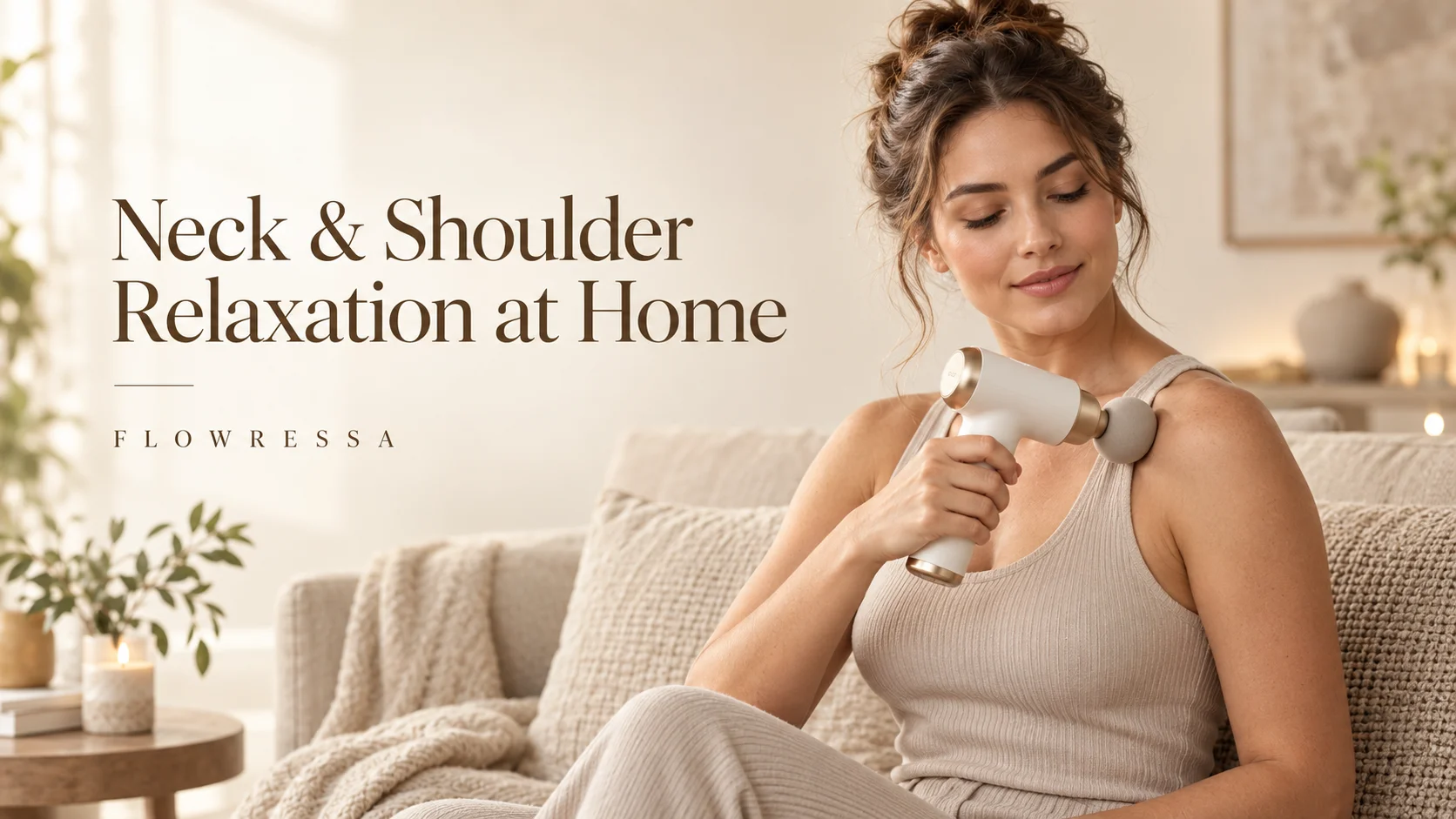
Best Massage Tools for Neck and Shoulder Relaxation at Home
Long hours at a desk, frequent phone use, demanding workouts and everyday stress can leave the muscles around your shoulders and upper back feeling tired or tight. A carefully selected massage tool can make it easier to create a relaxing self-care routine at home—without waiting for your next spa appointment.
The best massage tools for neck and shoulder relaxation should feel comfortable, offer controlled intensity and suit the area you want to massage. They should also be used correctly: percussion devices belong on muscle tissue, not directly on the spine, bones, joints or the delicate front and sides of the neck.
This guide compares popular types of massage tools, explains what to look for and shows you how to use an at-home massager more safely. You can also explore the Flowressa Massage Tools Collection for devices designed to support a calmer wellness routine.
Why Do the Neck and Shoulders Feel Tired?
Several daily habits can make the muscles around the upper back and shoulders feel tense:
- Looking down at a phone for long periods
- Sitting at a desk without changing position
- Raising the shoulders while typing
- Carrying a heavy bag on one side
- Repetitive upper-body activity
- Intense workouts
- Stress-related muscle tension
- Sleeping in an uncomfortable position
Occasional muscular tightness may respond to movement, stretching, rest or gentle massage. However, massage tools should not be used to diagnose or treat an injury or medical condition.
Pain that is severe, follows an injury or comes with numbness, tingling, weakness, swelling, dizziness, chest discomfort or pain spreading into the arm needs professional medical assessment.
What Are the Best Massage Tools for Neck and Shoulder Relaxation?
The best option depends on whether you prefer gentle rolling, targeted pressure, vibration, heat or percussion. No single tool is perfect for every person or every type of discomfort.
1. Percussion Massage Guns
A massage gun uses rapid, repeated movements to massage muscle tissue. Adjustable speed settings and interchangeable heads allow you to personalize the sensation for larger and smaller muscle areas.
Massage guns can be convenient for:
- Broad shoulder muscles
- The upper back, when safely reachable
- Post-workout massage
- Pre-activity muscle warm-up
- Short after-work relaxation sessions
The device should be used on appropriate muscles—not directly over the cervical spine, shoulder bones, joints, throat or the front and sides of the neck.
Advantages
- Multiple intensity levels
- Useful for several body areas
- Cordless and portable options
- Interchangeable attachments
- Easy to add to a home fitness routine
Considerations
- Strong settings can be uncomfortable for beginners.
- The upper back may be difficult to reach alone.
- Incorrect use over bones or sensitive structures can cause pain.
- Long sessions or excessive pressure may contribute to irritation or bruising.
2. Manual Trigger-Point Massagers
Manual massage canes, balls and handheld pressure tools let you control the force with your own hands or body position. They can be useful for targeted muscular areas around the shoulders and upper back.
Advantages
- No charging required
- Precise pressure control
- Generally quiet and portable
- Easy to use for short sessions
Considerations
- Applying too much pressure can still irritate tissue.
- Small hard tools should not be pressed directly onto the spine or bones.
- Maintaining an awkward position may strain your hands or arms.
3. Massage Rollers
Handheld rollers provide broad, continuous pressure across larger muscle areas. They are a simple option for people who dislike strong vibration.
Advantages
- Gentle and easy to control
- Suitable for warming up larger muscle groups
- No electrical components
- Simple to clean and store
Considerations
- Less precise than a massage gun or trigger-point tool
- Difficult to use independently on some upper-back areas
- Should never be rolled forcefully over the spine
4. Massage Pillows and Wraps
Electric massage pillows and shoulder wraps may use rotating nodes, vibration or heat. Their supported shape can make them convenient while sitting at home.
Advantages
- Hands-free or low-effort use
- Comfortable for relaxation sessions
- Some models include adjustable heat or intensity
- Designed to rest against broader body areas
Considerations
- The shape may not fit every body comfortably.
- Heat is not appropriate for everyone.
- Pressure may feel too concentrated if the device is positioned incorrectly.
5. Soft Massage Balls
A soft or moderately firm massage ball can be placed between the shoulder muscles and a wall for controlled rolling pressure.
Advantages
- Inexpensive and portable
- Easy to control against a wall
- Useful for selected upper-back muscles
- No batteries or charging
Considerations
- Avoid placing the ball directly over the spine or shoulder blade.
- Hard balls can create excessive pressure.
- Stop if the pressure causes sharp, burning or radiating pain.
How to Choose the Right Massage Tool
Consider these features before purchasing an at-home massager.
Adjustable Intensity
A device with several levels allows you to begin gently. More power is not automatically better, especially around the shoulder area.
Comfortable Weight and Grip
A heavy massager can tire your wrist before the session is finished. Look for a shape you can hold without raising your shoulder awkwardly.
Suitable Attachments
Massage-gun attachments are designed for different muscle groups. A soft round head is often easier for beginners across broad shoulder muscles, while narrow attachments create more focused pressure and require extra care.
Noise Level
A quieter motor can make evening relaxation more enjoyable and allows you to use the tool without disturbing others.
Cordless Operation
Rechargeable massagers provide more freedom of movement and are easier to carry between home, work and the gym.
Easy-to-Clean Surfaces
Attachments should be cleaned according to the manufacturer’s instructions. Avoid sharing massage tools without suitable cleaning.
Flowressa Recommendation: PulseRelief Pro
The PulseRelief Pro 30-Speed Deep Tissue Massage Gun offers adjustable percussion for a personalized at-home massage experience.
Its key features include:
- 30 adjustable speed levels
- Four interchangeable massage heads
- LCD speed and battery display
- Rechargeable cordless operation
- Low-noise motor
- Portable handheld design
- Settings suitable for different muscle groups
The round attachment is designed for broader areas such as the shoulders, arms, thighs and back. The flat head provides balanced contact for general muscle massage. Narrower attachments provide more focused pressure and should be used conservatively.
PulseRelief Pro can be part of a short after-work or post-activity relaxation routine when used over suitable muscles. It should not be applied directly to the cervical spine, the nape’s bony center, shoulder joints, throat or front and sides of the neck.
Compare it with other wellness accessories in the Flowressa Massage Tools Collection.
How to Use a Massage Gun Around the Shoulders Safely
Correct positioning and gentle intensity are more important than maximum power.
Step 1: Check the Area
Do not use the device over bruised, swollen, irritated, sunburned or broken skin. Avoid any area with unexplained pain or a recent injury.
Step 2: Choose a Broad Attachment
For the shoulder muscles, begin with a soft round or flat attachment rather than a narrow, pointed head.
Step 3: Start on the Lowest Speed
Turn on the device before placing it lightly against the muscle. Beginners should always start with the lowest comfortable setting.
Step 4: Target Muscle, Not Bone
Guide the device across the broad muscles at the top and back of the shoulders. Stay away from:
- The cervical spine
- The bony center at the back of the neck
- The front and sides of the neck
- The throat
- The collarbones
- The shoulder joint
- The shoulder blade itself
Step 5: Keep the Device Moving
Use slow, controlled passes and do not add heavy pressure. The percussion action already creates movement; pushing forcefully is unnecessary.
Step 6: Keep the Session Short
Begin with brief passes. Do not remain on one spot for a prolonged period. The Cleveland Clinic recommends limiting use to only a couple of minutes on a single muscle group and avoiding bony areas.
Step 7: Stop if It Hurts
Massage may create a strong sensation, but it should not cause sharp pain, burning, numbness, tingling, dizziness or bruising. Stop immediately if any of these occur.
Where Not to Use a Massage Gun
Never place a percussion massager directly over:
- Bones, joints or the spine
- The front or sides of the neck
- The throat
- The head or face
- Open wounds or irritated skin
- Areas of significant swelling
- Fresh injuries
- Varicose veins
- Areas with reduced sensation
- Any unexplained lump or painful area
People with osteoporosis, bleeding disorders, blood clots, neuropathy or other medical conditions—and people taking blood-thinning medication—should ask a healthcare professional before using a massage gun. The Hospital for Special Surgery also recommends professional guidance for people with underlying conditions and advises against use after a fresh injury with significant pain or swelling.
A 10-Minute At-Home Shoulder Relaxation Routine
This simple routine is designed for general relaxation, not injury treatment.
Minute 1–2: Reset Your Posture
Sit or stand comfortably. Let your shoulders drop away from your ears and take several slow breaths.
Minute 3–4: Gentle Movement
Roll the shoulders slowly backward and forward. Move within a comfortable range and avoid forcing the neck.
Minute 5–7: Massage Tool
Use a manual tool or massage gun on a low setting across the broad shoulder muscles. Keep it moving and avoid the spine and neck structures.
Minute 8–9: Light Stretching
Perform gentle shoulder and upper-back stretches without bouncing or pushing into pain.
Minute 10: Rest and Reassess
Stop, relax your arms and notice how the muscles feel. Do not repeat the routine immediately if the area feels tender.
Common Massage-Tool Mistakes
Using the Highest Setting First
High intensity is not necessary for an effective relaxation session. Starting low helps you understand how your body responds.
Pressing Directly on the Neck
The neck contains delicate structures and should not be treated like a large muscle group. Focus on appropriate shoulder and upper-back muscles.
Applying Extra Body Weight
Pushing hard does not necessarily improve the experience and may irritate the area. Allow the device to provide the movement.
Staying on One Spot Too Long
Stationary percussion can contribute to soreness or bruising. Keep the device moving slowly.
Using a Tool Over an Injury
Massage is not a substitute for diagnosis. Fresh injuries, swelling and severe pain require rest and professional assessment.
Ignoring Numbness or Tingling
These sensations may involve a nerve and should not be treated by increasing massage pressure. Stop and seek advice if symptoms persist.
When Should You See a Healthcare Professional?
Seek medical care rather than relying on a massage tool if:
- Pain is severe, sudden or follows an accident.
- Discomfort spreads into the chest, jaw or arm.
- You experience weakness, numbness or tingling.
- There is visible swelling, bruising or deformity.
- You develop dizziness, balance problems or a severe headache.
- Symptoms repeatedly wake you from sleep.
- Pain persists or keeps returning.
Neck and shoulder discomfort can have several causes. A doctor or physical therapist can assess the source and recommend appropriate care.
Frequently Asked Questions
Can I use a massage gun directly on my neck?
Do not apply a massage gun directly to the cervical spine, bony center of the neck, throat or front and sides of the neck. Use it only on appropriate surrounding muscle areas and follow the device instructions.
Which massage-gun head is best for the shoulders?
A soft round or flat attachment is usually a practical starting choice for broad shoulder muscles. Begin at a low speed and avoid pointed attachments until you fully understand their intended use.
How long should I use a massage gun on my shoulders?
Begin with short passes and assess your comfort. Do not spend more than a couple of minutes on a single muscle group, and stop earlier if the area becomes painful or irritated.
Can I use a massage tool every day?
Light, brief use may be comfortable for some people, but daily intense percussion is unnecessary. Allow the muscles to recover and stop if you develop tenderness or bruising.
Is a massage gun suitable after a workout?
It can be used gently on suitable muscle groups as part of a warm-up or cool-down routine. It should not be used over an acute injury, significant swelling or severe pain.
Can a massage tool fix poor posture?
No. Massage may provide temporary relaxation, but it does not correct the habits, strength or mobility issues associated with posture. Combine self-care with regular movement, ergonomic adjustments and professional guidance when needed.
Final Thoughts
The best massage tools for neck and shoulder relaxation give you control, feel comfortable to use and suit your preferred level of pressure. Manual rollers and massage balls offer simplicity, while an adjustable percussion device provides a more customizable experience across suitable muscle areas.
Whatever tool you choose, start gently, keep sessions short and avoid bones, joints and the delicate structures of the neck. A massage tool should support a relaxing wellness routine—not replace medical care for pain, injury or neurological symptoms.
Ready to compare your options? Shop Flowressa Massage Tools and find a convenient addition to your at-home self-care routine.
Internal Links Included
- Flowressa Massage Tools Collection: https://flowressa.com/collections/massage-tools/
- PulseRelief Pro Product Page: https://flowressa.com/product/pulserelief-pro-30-speed-massage-gun/
Trusted External Links Included
- Cleveland Clinic — Massage Gun Use and Safety: https://health.clevelandclinic.org/are-massage-guns-for-percussive-therapy-worth-it
- Hospital for Special Surgery — How to Use a Massage Gun: https://www.hss.edu/health-library/move-better/how-to-use-massage-gun
WordPress Publishing Checklist
- Use the article title as the only H1.
- Set the SEO-friendly URL shown above.
- Add the meta title and description in Rank Math or Yoast SEO.
- Set the focus keyword to best massage tools for neck and shoulder relaxation.
- Include the focus keyword in the title, introduction, one subheading, conclusion and image alt text.
- Add a professional 16:9 featured image using the suggested filename and alt text.
- Add the article to the Massage & Wellness category.
- Open internal Flowressa links in the same tab.
- Open external references in a new tab.
- Add the author name and a visible reviewed or updated date.
- Preview the layout on desktop and mobile before publishing.