
How to Build a Healthy-Looking Scalp-Care Routine at Home

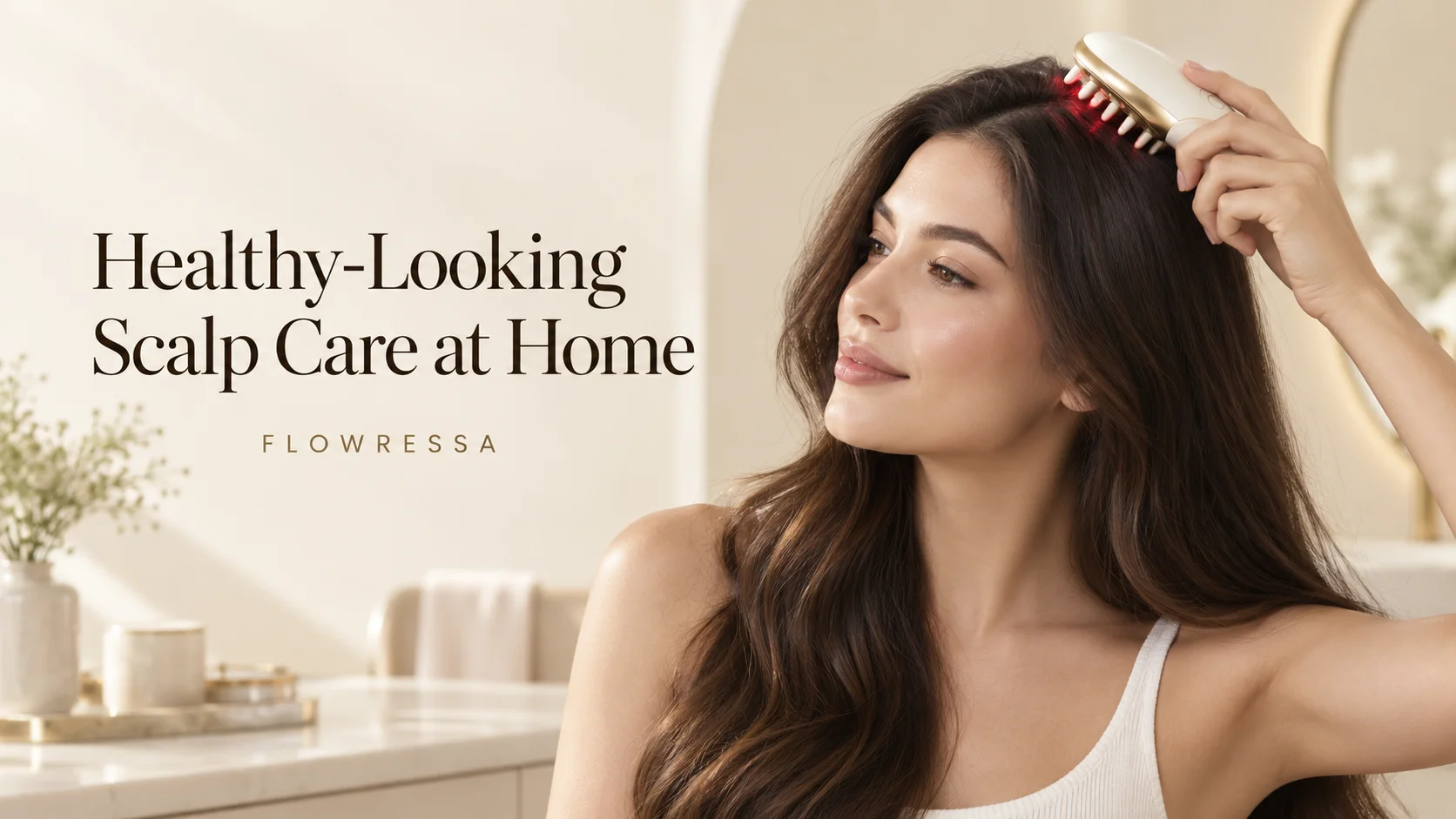
How to Build a Healthy-Looking Scalp-Care Routine at Home
Beautiful-looking hair begins with consistent care at the roots. Product buildup, excess oil, dryness and aggressive styling can make the scalp feel uncomfortable and leave the hair looking flat or difficult to manage. The good news is that an effective healthy-looking scalp-care routine does not need to be complicated.
With gentle cleansing, careful product application and a few minutes of scalp massage, you can create a routine that fits your hair type and lifestyle. This guide explains how to care for your scalp at home, which mistakes to avoid and how Flowressa hair tools can make each step easier and more enjoyable.
Ready to upgrade your routine? Explore the Flowressa Hair Tools Collection for scalp massagers, applicator combs and styling tools designed for convenient at-home care.
Why Scalp Care Matters
The scalp is skin, and it regularly collects natural oil, sweat, dead skin cells and residue from styling products. When these materials build up, the roots may feel greasy, heavy or uncomfortable. Washing too aggressively can create a different problem by leaving the scalp and hair feeling dry.
A balanced routine aims to keep the scalp feeling clean and comfortable without excessive scrubbing. It can also make it easier to distribute shampoos, lightweight oils and scalp serums more evenly.
The American Academy of Dermatology recommends washing according to your hair type and applying shampoo mainly to the scalp, where excess oil, dead skin and product buildup collect. Read its healthy hair-care recommendations for additional guidance.
Step 1: Understand Your Scalp and Hair Type
Before buying new products or creating a schedule, observe how your scalp normally behaves.
Oily-Looking Scalp
An oily scalp may look shiny or feel heavy soon after washing. Fine or straight hair can also make oil at the roots appear more noticeable. Choose lightweight products and wash as often as your scalp and hair type require.
Dry-Feeling Scalp
A dry-feeling scalp may feel tight or show small flakes. Harsh shampoos, very hot water and weather conditions may contribute to dryness. Use gentle products suited to your hair type, avoid scratching and reduce unnecessary heat.
Product-Prone Scalp
Dry shampoo, styling creams, oils and leave-in products can accumulate around the roots. Regular shampoo-and-water cleansing is important because dry shampoo does not actually wash away oil, dead skin or product residue.
Sensitive or Irritated Scalp
If your scalp burns, develops a persistent rash, feels painful or has open areas, avoid massage devices and fragranced treatments. Speak with a dermatologist before adding new tools or formulas.
Step 2: Create a Washing Schedule That Fits You
There is no universal number of wash days that works for everyone. Your schedule should reflect your scalp oiliness, hair texture, lifestyle and product use.
People with straight or fine hair and an oily scalp may prefer more frequent washing. Curly, coily, thick or dry hair may need a different schedule. The goal is to cleanse before buildup becomes uncomfortable while avoiding unnecessary washing that leaves the lengths dry.
If you regularly use dry shampoo, do not let it replace washing with shampoo and water. The American Academy of Dermatology explains that conventional shampooing removes accumulated dead skin, oil and microorganisms from the scalp. See its dry shampoo usage advice.
Step 3: Cleanse the Scalp, Not Just the Hair
Apply shampoo mainly to the scalp and roots. Use your fingertips to work the product gently between sections of hair. Allow the lather to rinse through the lengths instead of aggressively rubbing the ends.
Follow these simple steps:
- Wet the scalp and hair thoroughly with comfortably warm water.
- Apply an appropriate amount of shampoo to the scalp.
- Massage gently using the pads of your fingers, not your nails.
- Focus on the hairline, crown, behind the ears and the back of the head.
- Rinse completely until no shampoo remains.
- Repeat only when necessary, such as after heavy product use.
Incomplete rinsing can leave residue that contributes to itching or discomfort. Take extra time to rinse thick or dense hair in sections.
Step 4: Add Gentle Scalp Massage
Scalp massage can turn a basic wash day into a relaxing self-care ritual. It can also help spread shampoo or a suitable scalp product more evenly.
Use your fingertips or a soft silicone scalp brush and work in slow, controlled movements. Massage should feel comfortable—never painful. Avoid using your fingernails, aggressive pressure or fast scrubbing that tangles the hair.
Flowressa Recommendation: ScalpEase
The ScalpEase Silicone Shampoo Brush & Scalp Massager is available in the Flowressa Hair Tools Collection. Its handheld design can help distribute shampoo around the scalp while adding a gentle massage sensation to your wash-day routine.
Use light pressure and move between sections instead of pulling the brush through the full length of the hair. Rinse the tool and allow it to dry completely after every use.
Step 5: Condition the Hair Correctly
Conditioner helps the hair feel smoother and easier to detangle, but application depends on your hair type.
For fine or straight hair, applying conditioner mainly to the mid-lengths and ends may prevent the roots from feeling overloaded. Dry, curly or coily hair may benefit from conditioning more of the length according to the product directions and personal needs.
Detangle gently. Wet hair can be more vulnerable to breakage, so avoid pulling through knots quickly. Use your fingers or an appropriate wide-tooth comb, working from the ends upward.
Step 6: Apply Scalp Oils and Serums with Control
Scalp oils and serums can be pleasant additions to a routine when they suit your scalp and are used according to their instructions. However, pouring too much product directly onto the roots can create uneven coverage and leave the hair feeling greasy.
For more controlled application:
- Divide the hair into sections.
- Apply a small amount directly to the intended scalp areas.
- Use only formulas designed for scalp or hair use.
- Avoid applying oils to broken or irritated skin.
- Follow the product’s directions for application and rinsing.
- Stop if the formula causes itching, burning or redness.
Do not assume that every essential oil is safe to use directly on the scalp. Concentrated essential oils may cause irritation and should never be used contrary to their instructions.
Flowressa Recommendation: LumiScalp Pro
The LumiScalp Pro Red Light Scalp Massager & Oil Applicator Comb combines gentle vibration, 630nm red light and an integrated liquid reservoir. Its rounded massage teeth help distribute suitable lightweight oils or scalp serums across selected areas with less mess.
To use it as part of your routine:
- Make sure the device and reservoir are clean and dry.
- Fill the reservoir with a suitable lightweight scalp oil or serum.
- Separate the hair into sections.
- Place the rounded teeth gently against the scalp.
- Move slowly through each section without pressing aggressively.
- Empty leftover product and clean the application surfaces after use.
Avoid thick creams and products containing particles, as they may not flow correctly through the applicator. Always follow the supplied device and cosmetic-product instructions.
Step 7: Use Beauty Technology Realistically
LED and vibration scalp devices can make an at-home routine feel more convenient and enjoyable, but cosmetic tools should not be presented as cures for hair loss or medical scalp conditions.
If you choose an LED scalp-care tool:
- Follow the manufacturer’s session time and frequency.
- Use it only on a clean, comfortable scalp unless instructed otherwise.
- Do not use it over open wounds or inflamed skin.
- Stop if you experience pain, burning or unexpected irritation.
- Ask a healthcare professional before use if you have a diagnosed scalp condition or take photosensitizing medication.
The Flowressa Hair Tools Collection includes modern options for scalp care as well as everyday styling accessories.
Step 8: Protect the Hair After Washing
Your post-wash habits affect how your hair looks and feels.
- Gently absorb water with a soft towel or cotton T-shirt.
- Do not rub the hair aggressively.
- Detangle slowly with a suitable comb.
- Use a heat-protectant product before heated styling.
- Choose low or medium heat when possible.
- Avoid tight hairstyles that repeatedly pull at the roots.
- Keep brushes, combs and scalp tools clean.
If you prefer to reduce direct heat, the Flowressa Hair Tools Collection also includes options such as the SilkWave Heatless Satin Hair Curler Rod Set.
A Simple Weekly Scalp-Care Schedule
The following example can be adjusted to match your hair type and wash frequency.
On Wash Day
- Brush or detangle the lengths gently before washing when appropriate.
- Wet the scalp thoroughly.
- Apply shampoo mainly to the scalp.
- Massage gently with fingertips or ScalpEase.
- Rinse completely.
- Condition according to your hair type.
- Dry gently and avoid excessive heat.
Between Washes
- Avoid scratching or picking at the scalp.
- Use dry shampoo sparingly and wash it out regularly.
- Keep hats, pillowcases and hair tools clean.
- Apply only products that suit your scalp.
- Use a clean massage or applicator tool according to its instructions.
Once a Week or As Needed
- Check for product buildup around the roots.
- Clean brushes, combs and scalp tools.
- Review whether your current products are causing discomfort.
- Use a lightweight oil or serum only if it suits your routine.
Common Scalp-Care Mistakes to Avoid
Scratching with Fingernails
Scratching can damage the skin and worsen irritation. Use the pads of your fingers and gentle pressure instead.
Using Very Hot Water
Hot water can make the scalp and hair feel drier. Choose comfortably warm water and rinse thoroughly.
Applying Too Much Oil
More oil does not automatically mean better scalp care. Excess product can make the roots heavy and create additional buildup.
Treating Every Flake as Dryness
Flaking may be related to dryness, dandruff, product irritation or another scalp condition. Persistent symptoms should be assessed rather than covered with more oil.
Massaging Inflamed Skin
Do not use scalp brushes or electric massage tools over swollen, painful, broken or irritated skin.
Expecting Instant Hair-Growth Results
A cosmetic scalp-care tool can support a relaxing routine and help with product application, but it cannot diagnose or guarantee treatment of hair loss.
When Should You See a Dermatologist?
Home care is not appropriate for every scalp concern. Seek professional advice if you experience:
- Persistent or severe itching
- Pain, burning or swelling
- Open sores, bleeding or oozing
- Thick, widespread or recurring scales
- Sudden or patchy hair loss
- A rash that spreads beyond the scalp
- Symptoms that do not improve with appropriate over-the-counter care
Dandruff, psoriasis, eczema, allergic reactions and other conditions may look similar. A dermatologist can provide an accurate diagnosis and recommend suitable treatment. The American Academy of Dermatology offers additional guidance on dry scalp and related conditions.
Frequently Asked Questions
How often should I wash my scalp?
Wash according to how quickly your scalp becomes oily or dirty and according to your hair texture. Fine or straight hair with an oily scalp may need more frequent washing, while dry, curly, coily or thick hair may follow a less frequent schedule.
Can I massage my scalp every day?
A short, gentle massage may be comfortable for many people, but avoid aggressive daily pressure. Stop if you notice tenderness, redness, increased itching or breakage.
Should scalp oil be applied before or after shampooing?
Follow the directions for the specific product. Some oils are designed as pre-shampoo treatments, while lightweight leave-in scalp serums may be used after washing.
Can scalp massage cure hair loss?
No. Scalp massage is a self-care practice and should not replace medical assessment or proven treatment. Sudden, patchy or persistent hair loss should be evaluated by a dermatologist.
Is a silicone scalp brush suitable for everyone?
Many people can use a soft silicone brush gently, but it should not be used on open, painful, inflamed or highly sensitive skin. People with diagnosed scalp conditions should ask their dermatologist first.
How do I keep scalp tools clean?
Remove hair and product residue after every use, wash suitable surfaces according to the product instructions and allow them to dry fully before storage. Do not submerge an electrical device unless it is specifically designed for immersion.
Final Thoughts
The best healthy-looking scalp-care routine is consistent, gentle and personalized. Learn how quickly your scalp becomes oily, cleanse the roots thoroughly, rinse well and avoid scratching or excessive heat. Add massage and controlled serum application only when these steps feel comfortable and suit your needs.
Tools such as ScalpEase and LumiScalp Pro can help make washing, massage and product distribution easier, but they work best as part of a balanced routine—not as substitutes for professional treatment.
Explore the complete Flowressa Hair Tools Collection to discover scalp-care tools, applicators and styling essentials for your at-home beauty routine.
Internal Links Included
- Flowressa Hair Tools Collection: https://flowressa.com/collections/hair-tools/
- LumiScalp Pro Product Page: https://flowressa.com/product/lumiscalp-pro-red-light-scalp-massager/
Trusted External Links Included
- American Academy of Dermatology — Healthy Hair Tips: https://www.aad.org/public/everyday-care/hair-scalp-care/hair/healthy-hair-tips
- American Academy of Dermatology — Dry Shampoo Advice: https://www.aad.org/public/everyday-care/hair-scalp-care/hair/dry-shampoo-best-results
- American Academy of Dermatology — Dry Scalp Conditions: https://www.aad.org/public/everyday-care/hair-scalp-care/scalp/dry-scalp-conditions
WordPress Publishing Checklist
- Use the article title as the only H1.
- Set the SEO-friendly URL shown above.
- Add the meta title and description in Rank Math or Yoast SEO.
- Set the focus keyword to healthy-looking scalp-care routine.
- Add the focus keyword naturally to the title, introduction, one H2, conclusion and image alt text.
- Add a 16:9 featured image using the suggested filename and alt text.
- Place the article in the Hair Care category.
- Open internal Flowressa links in the same tab.
- Open trusted external sources in a new tab.
- Add an author and a clearly visible updated date.
- Preview the article on desktop and mobile before publishing.